Our final day started later than planned, allowing us time to recover from the long journey the day before. We gathered in one of the hotel halls for a group discussion, sharing reflections, emotions, and insights from the seminar. Afterwards, we traveled to the Río Seco Natural History Museum, located in a suburban neighborhood of Punta Arenas.

Founded by Miguel Cáceres and Aymara Zegers on the site of the historic South American Export Syndicate LTDA meatpacking plant, the museum has operated for over a decade.
The MHNRS serves as a space for research, conservation, and the promotion of the natural and cultural heritage of South America’s southernmost regions. It collaborates with local, national, and international networks to manage collections, preserve memories marginalized by official history, and reactivate abandoned industrial spaces.
After touring the exhibition hall and workshop, we moved to the upper floor of the museum’s storage facility. There, right in front of the hanging skeleton of an enormous whale, the seminar’s final public conference was held.
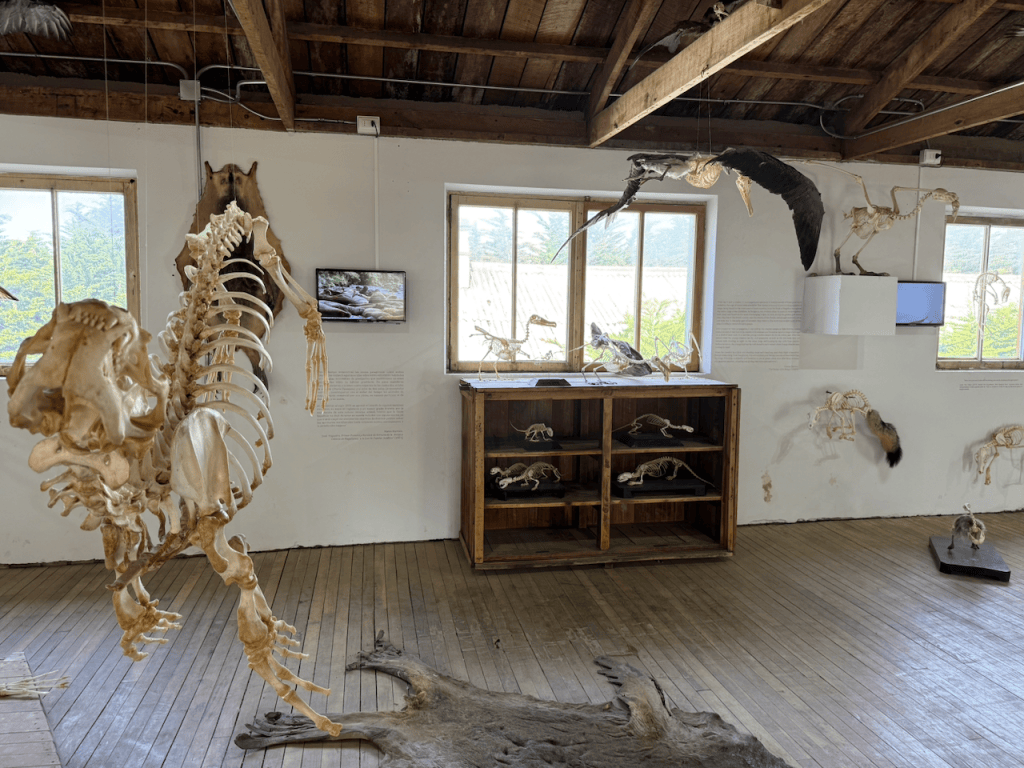
Sebastian Brünger, Head of the Climate and Sustainability Development Program at the Kulturstiftung des Bundes, opened the conference with greetings. The keynote lecture by historian Alberto Harambour followed, analyzing the nation-state, the pursuit of “white gold,” and religious missions as three key forces of modern colonialism—particularly during the conquest of Tierra del Fuego and Patagonia between the 1870s and 1920s. While the balance among these forces shifts over time, Harambour argued that colonialism continues to reproduce itself. Through state mythology, historiography, and heritage politics, dispossession is both celebrated and hidden, serving to reaffirm exceptionalism.

WEBN fellows Alberto Serrano, Karen Luza, and Adriana Mercado responded to Harambour’s framework. Serrano discussed the decolonization of the Museo Territorial Yagán Usi—formerly the Martin Gusinde Anthropological Museum—the southernmost museum in the world. Founded in the 1970s by naval personnel to assert Chilean sovereignty, the museum has, over the past decade, undergone a significant transformation led by Alberto, in collaboration with the Yagán community, rethinking its collection and developing new narratives led by Indigenous voices.
Karen Luza screened her short documentary La voz del agua – San Pedro de Atacama, documenting her community’s resistance to lithium extraction projects that threaten water sources in the Atacama Desert. While Indigenous self-determination is recognized under international law, Luza emphasized the limited understanding of how political economy constrains its realization.
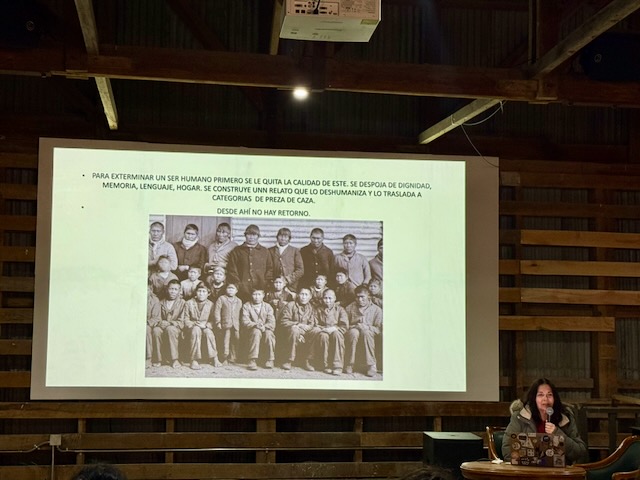
Adriana Mercado shared the Selk’nam cosmological worldview, framing her self-taught recovery of heritage as a journey toward the horizons of memory. Historically marginalized and denied recognition as a living people, the Selk’nam continue to face the aftereffects of colonial violence.
The conference concluded with a panel discussion moderated by Iris Dressler, featuring all speakers and Miguel Cáceres. Afterward, a final dinner at La Marmita—fittingly ending with figs stuffed with walnuts—was held at the hotel, along with closing remarks and heartfelt goodbyes.