Bio:
Water rights activist Karen Luza was born to a mining-related family in the city of Chuquicamata. Today, from the Ayllu of Sequitor, she promotes various projects to safeguard the heritage of the Lickanantay communities of the Atacama Desert.
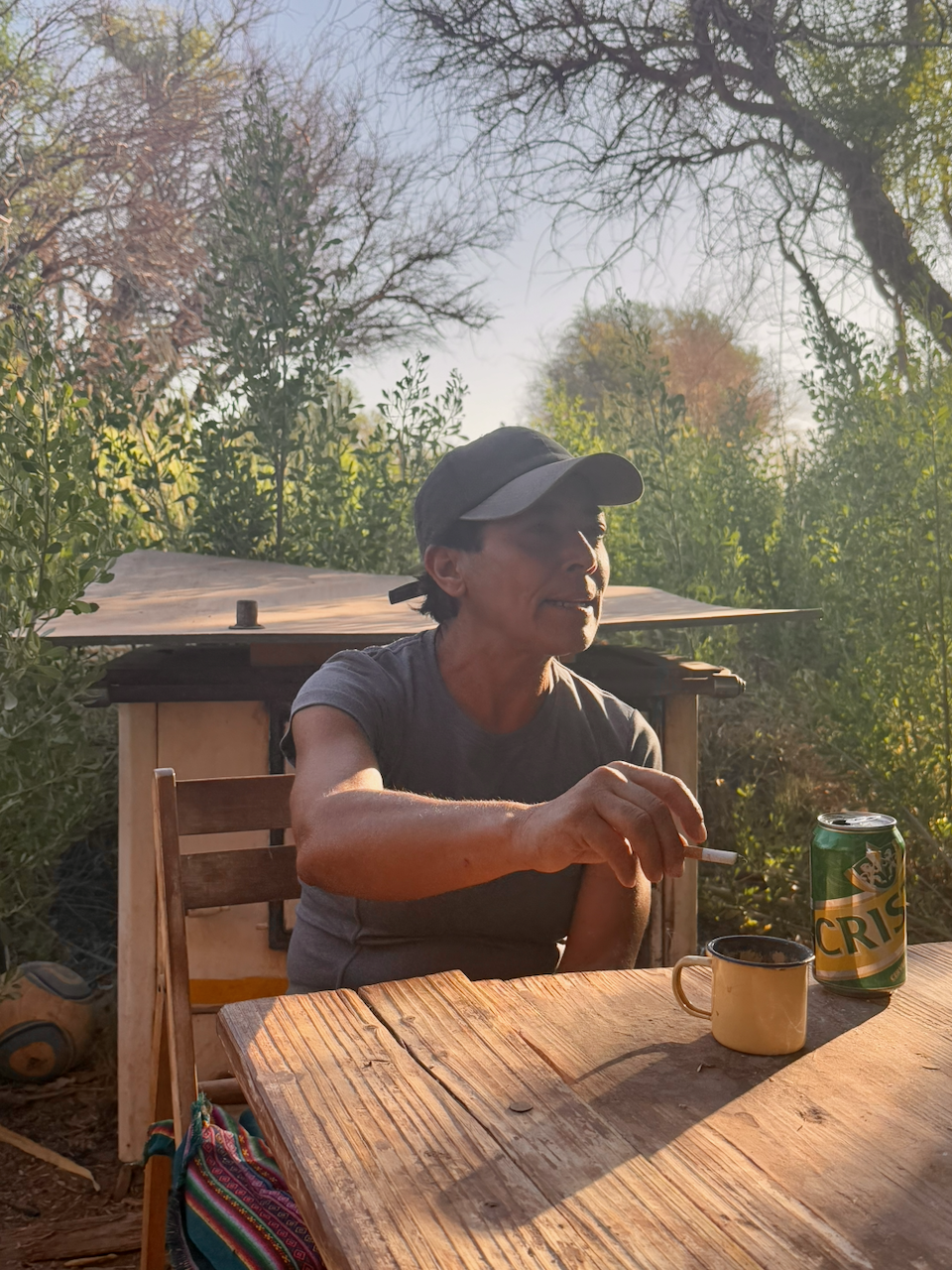
Karen Luza in conversation with Rodolfo Andaur:
Part 1: Daily life in Atacam desert
Karen Luza says that one of her main tasks is working with her horses. She practices equine therapy, so she aims to turn this space into a place for therapeutic reflection. But she is also a water rights activist and aims to promote the recovery of ancestral technology.
Part 2: The threat of tourism
Besides she stays in Sequitor a perfect place for her way of life. For her the tourism has harmed indigenous communities. She’s not interested in the hustle and bustle of the main town San Pedro de Atacama and its alarming consumers. For this reason, she prefers solitude, as it brings her a unique peace of mind to study her projects. She has another time in Sequitor. She navigates through other time.
Part 3: Water as indigenous heritage
Every time she cleans the water canals with the rest of the community. She says that all of them are performing a ritual to the water. They need these rituals, and they need to emphasize the way their ancestors did it. Unfortunately, today, these rituals, in some places, are organized by producers who undoubtedly don’t understand the tragedy they have experienced in the struggle for the water ancestral right, she says. She is not there to spectacularize the rituals, much less allow others to organize by people outside our traditions.
Part 4: Irrigation
Karen meets with Galit Eilat in Sequitor. She is interested in our help so she would like that others understand the heritage importance of the irrigation system for her community. It’s important to declare the irrigation system as intangible heritage, she says. Unfortunately, nowadays the Chilean government is organizing the national lithium policy at the discretion of private individuals, what is left for us in a conflict situation. For her point of view, the Chilean government is worried in the private companies nor in her mood of life and rituals. If we as a community lose control of our rituals and let others do it for us, even the Chilean government, we are abandoning an important part of our ancestral practices, she says.